 Skip to content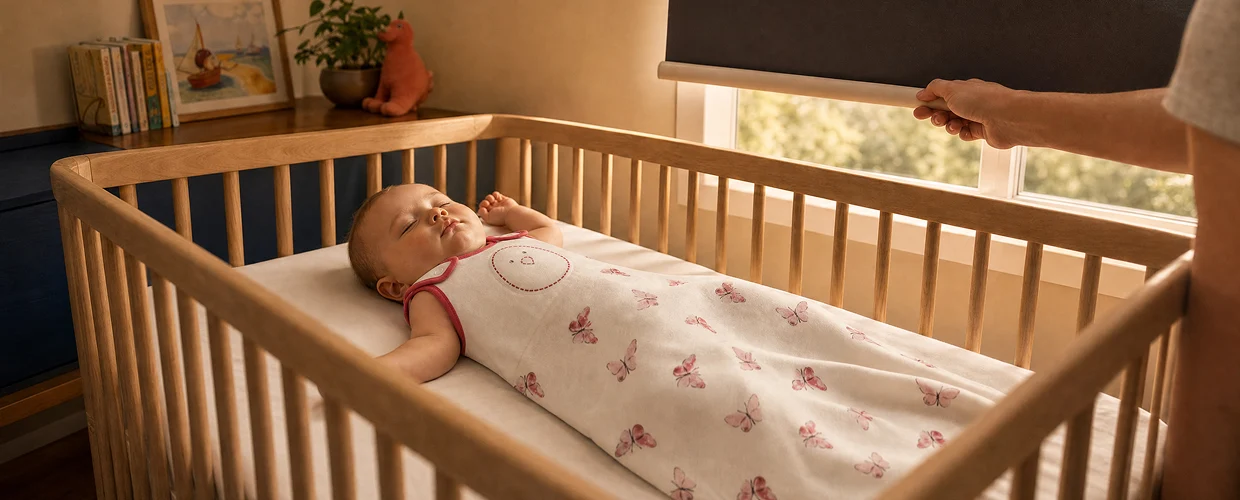
How to Keep Your Baby Sleeping in Summer
Baby sleep in summer has a way of unraveling the routine you worked so hard to build. The sun is still up at bedtime, the bedroom holds the day’s heat long after dark, and the calendar fills with trips, cookouts, and late nights with people you love. If you’re bracing for the season to undo your baby’s good nights, take a breath. It doesn’t have to.
At Nested Bean, we hear the same question from parents: why does baby sleep in summer suddenly feel so unpredictable?
The good news is that summer sleep isn’t fragile, it’s just different. With a few adjustments to light, temperature, and rhythm, your little one can sleep just as soundly in July as they did in February. This guide walks you through the whole season, the room, the schedule, dressing, busy days, comfort, and the occasional rough patch, and points you to deeper guides where you want more detail.
Expert Summary
- Baby sleep in summer comes down to three things. Light, heat, and a busier schedule matter most.
- Keep the room 68–72°F, dark with blackout shades, and moving air with a fan.
- Dress light with a low-TOG, breathable sleep sack instead of heavier layers.
- Check for overheating at the neck and chest, not the hands and feet.
- Carry your bedtime routine with you. Rough nights usually resolve within a night or two.
Table of Content
- Why summer changes your baby’s sleep
- Getting the Room Right for Baby Sleep in Summer
- What Baby Sleep in Summer Looks Like by Age
- Protecting the routine when life gets busy
- Spotting overheating and keeping your baby comfortable
- When summer brings regressions or a cold
Sleep tips. Parent hacks. Deals.
Add your email address to sign up for our weekly emails and to receive promotional offers.
Why summer changes your baby’s sleep
Here’s the thing most parents discover the hard way: nothing about your baby changes in summer, but almost everything around them does. Three shifts do most of the damage, and once you can name them, you can manage them.
The first is light. Longer days mean the sun is often still streaming in at 7 or 8 p.m. Light is the single strongest signal to your baby’s developing circadian rhythm, the internal clock that tells the body when to feel sleepy. When the room stays bright, the brain holds back the natural rise in melatonin that helps sleep begin, so bedtime drifts later and wake-ups come earlier.
The second is heat. Babies can’t regulate their body temperature as efficiently as adults, and a room that felt cozy in spring can turn stuffy by late June. Discomfort from being too warm is one of the most common reasons a baby who was sleeping well suddenly starts stirring.
The third is disruption. Travel, daycare schedule changes, family visits, and later evenings all chip away at the consistency that makes sleep predictable. Your baby thrives on rhythm, and summer is the season most likely to scramble it.
None of these are problems you can’t solve. They’re just variables, and once you manage them, baby sleep in summer falls back into place.
Getting the Room Right for Baby Sleep in Summer

If you only change one thing this summer, make it the sleep environment. A calm, cool, dark room does more for baby sleep in summer than any single trick.
Temperature Sets the Tone for Baby Sleep in Summer
A comfortable sleep space for most babies sits in roughly the 68–72°F range. You don’t need to chase a perfect number; aim for a room that feels pleasant to you in a light layer. A simple room thermometer takes the guesswork out, and a fan (pointed at the wall, not directly at your baby) keeps air moving and can soften outside noise at the same time.
Light
Blackout shades or curtains are worth their weight in gold from May through August. The goal is a room dark enough that your baby’s brain reads it as night even when the sky disagrees. Pair the dark room with a consistent wind-down so the routine, not the sunset, becomes the cue for sleep. If you want a deeper playbook on getting longer stretches, our guide to helping your baby sleep through the night covers the fundamentals that matter year-round.
Air and Layers
The right sleepwear is a light one in summer. A breathable, low-TOG layer keeps your baby comfortable without trapping heat. Nested Bean’s Zen Sack™ Premier in bamboo is built for exactly this: a 0.3 TOG, moisture-wicking weight designed for warm rooms, while the Zen Bodysuit™ is the lightest option in the line for the hottest nights.
Each features the Cuddle Pad™ that mimics your gentle touch, so your little one still feels that reassuring sense of being held even in the thinnest fabric.
A cool, dark, and quiet room can also make it easier for your baby to use self-soothing techniques and settle back to sleep after brief night wakings.

Trusted by 2.5 million parents

Easy Returns within 60 days

Comfortable sleep for your baby

Free Shipping on orders over $75
Zen Sack™ Premier Bamboo
❤️ Loved by 2.5 Million+ Parents
View Product
What Baby Sleep in Summer Looks Like by Age
Your baby’s stage shapes how summer lands. Here’s the high-level view; for a complete, temperature-by-temperature breakdown of what to put your baby in, see our dedicated guide on dressing your baby for sleep in hot summer weather.
Newborns (0–3 months). Tiny babies feel temperature swings most acutely and can’t shed heat well. Keep layers minimal and the room cool, and resist the urge to over-bundle. Newborn sleep is driven by feeding, not the clock, so summer’s long evenings matter less here; your job is mostly comfort and a calm, dim space.
Older infants (3–6 months). This is when light and routine start to bite. If bedtime has crept later, a dark room and a steady wind-down pull it back. It’s also a common window for the 4-month sleep regression, which summer can mask or amplify; the fix is consistency, not a new gadget.
Babies and toddlers (6–24 months). Mobility, naps, and stronger schedule preferences all show up here. Hot afternoons can shorten naps, and a too-warm room makes the dreaded early-morning wake-up worse. A lightweight sleep sack and a cool, dark room are your two best levers. If naps are the trouble spot, our tips on getting your baby to nap longer translate directly to summer.
Across every age, the principle is the same: lighter layers, darker room, steady rhythm.
Alt text: Baby sleeping peacefully in cool dark room
Protecting the Routine When Life Gets Busy

Summer is the season of out. Beach days, barbecues, weddings, and trips to see grandparents are the whole point, and they’re also where sleep slides quietly. The goal isn’t to stay home all summer, it’s to protect the anchors that let your baby sleep anywhere.
Keep the bedtime sequence portable. The same three or four steps (feed, fresh diaper, sleep sack, song) signal “sleep now” whether you’re in the nursery or a hotel room. Babies attach to the pattern, not the place, so carrying the sequence with you does most of the work.
Protect the first nap and bedtime when you can, and let the middle of the day flex. A baby who gets a solid morning nap and a reasonably on-time bedtime can usually absorb a skipped or short afternoon nap without the whole day collapsing.
Travel adds its own wrinkles, from unfamiliar rooms to time zones to gear you didn’t pack. We’ve put the full travel playbook in a separate guide on maintaining sleep routines when you’re away from home (link at publish), so this section stays focused on the principle that consistency you can carry beats perfection you can’t.
And give yourself grace. A few off nights on vacation won’t undo months of good habits. Babies bounce back more than the parenting internet suggests, and a return to your normal rhythm usually resets baby sleep in summer within a night or two. A familiar layer from your sleep sacks collection is the easiest cue to pack.
Spotting Overheating and Keeping Your Baby Comfortable
This is the part of summer sleep where a little knowledge brings a lot of calm. Babies overheat more easily than adults, so it helps to know what comfortable actually looks like, and what doesn’t.
To check your baby’s temperature, feel the back of the neck or the chest, not the hands and feet, which run cool on almost everyone. Skin that’s warm and dry is just right. Signs a baby may be too warm include damp hair or neck, flushed cheeks, rapid breathing, or restlessness. The American Academy of Pediatrics advises dressing babies in no more than one additional layer than an adult would find comfortable, and keeping the sleep space cool and uncluttered.
If your baby feels too warm, the fix is simple. Remove a layer, lower the room temperature, and offer a feed, since fluids matter more in heat. Breastfed and formula-fed babies under six months get their hydration from milk, not water, so more frequent nursing or bottles is the right response on hot days.
Keep the crib itself bare. A safe sleep space (firm, flat surface, no loose blankets, bumpers, or pillows) matters all year, and it doubles as your best defense against overheating in summer, because a wearable sleep sack replaces the loose blanket entirely. For a full refresher, the AAP’s safe sleep recommendations are the authoritative source, and our own safe sleep guidelines summarize the essentials.
Alt text: How to check if baby is overheating
When Summer Brings Regressions or a Cold
Even with everything dialed in, some nights of baby sleep in summer go sideways, and summer has a few specific culprits worth naming so you don’t panic.
Schedule-driven regressions. A week of late nights and skipped naps can look exactly like a true sleep regression. The tell is timing: if rough nights line up with a disrupted week rather than a developmental leap, the answer is a gentle return to routine, not a new strategy. If you’re unsure which you’re dealing with, the (signs of a sleep regression guide)[ helps you tell them apart.
Heat and travel rolling together. A hot room plus an unfamiliar bed is a tough combination for any baby. Tackle them one at a time. Get the environment right first, then rebuild the routine, rather than trying to fix everything in one night.
Summer colds and teething. Both can disrupt sleep regardless of season. Comfort comes first, and a familiar sleep sack with its Cuddle Pad™ can offer steady reassurance when your baby isn’t feeling like themselves. Anything beyond normal fussiness (fever, breathing trouble, dehydration) is a conversation for your pediatrician, not a sleep tweak.
The throughline of the whole season is simple. When a night goes wrong, look for the variable that changed, fix that one thing, and trust that baby sleep in summer can settle back into rhythm just as fast as it slipped.
Key Takeaways
- Manage the three variables behind baby sleep in summer. Light, heat, and disruption each matter, and each is controllable once you can name it.
- The room does the heavy lifting. Aim for roughly 68–72°F, dark with blackout shades, and air moving with a fan.
- Dress lighter, not heavier. A low-TOG, breathable Zen Sack™ Premier sleep sack keeps your baby comfortable without trapping heat.
- Carry the routine, not the place. A portable bedtime sequence protects sleep through travel and busy days.
- Know what overheating looks like. Check the neck and chest, watch for damp skin and flushing, and keep the crib bare and cool.
Sources
- American Academy of Pediatrics, Healthy Sleep & Safe Sleep: healthychildren.org
- American Academy of Pediatrics, Safe Sleep recommendations: aap.org
- Centers for Disease Control and Prevention, Infant hydration and heat guidance: cdc.gov
Frequently Asked Questions
Does a Fan Help Babies Sleep in Summer?
Yes, a fan keeps air circulating, prevents a room from getting stuffy, and adds steady white noise that can soften household and outdoor sounds. Point it at a wall rather than directly at your baby so the air moves through the room without a draft.
Which Sleepwear Is Best for Baby Sleep in Summer?
For warm rooms, the Zen Sack™ Premier bamboo (0.3 TOG) and the Zen Bodysuit™ are the lightest, most breathable options. Both let air move freely while keeping the Cuddle Pad™ comfort that helps your little one settle. You can compare the full range in our sleep sacks collection.
How do I keep my baby’s sleep on track while traveling?
Carry the bedtime sequence with you; the same few steps in the same order signal sleep anywhere. Protect the morning nap and bedtime, let the midday flex, and bring a familiar sleep sack so the feel of bedtime stays constant even when the room changes.
What affects baby sleep in summer the most?
Three things drive most of the change. Longer daylight, a hotter room, and a busier schedule stand out most. Manage the room’s temperature and light, dress your baby lighter, keep a portable bedtime routine, and baby sleep in summer holds up just as well as any other season.
Does my baby need a sleep sack in summer?
Yes, just a lighter one. A sleep sack is still the safest way to keep your baby covered without loose blankets in the crib, and that matters in summer as much as any other season. The real difference is fabric weight. Look for a low-TOG, breathable option, like Nested Bean’s Zen Sack™ Premier in bamboo, built to keep your baby covered and cool instead of trapped in heat.
How does Nested Bean help with baby sleep in summer?
Nested Bean’s Zen Sack™ and Zen Bodysuit™ use a low-TOG, breathable fabric and the Cuddle Pad™, so your baby stays cool while still feeling that comforting, hands-on touch through the warmest nights. It’s one part of the bigger picture alongside room temperature, light control, and a routine you can travel with.