 Skip to content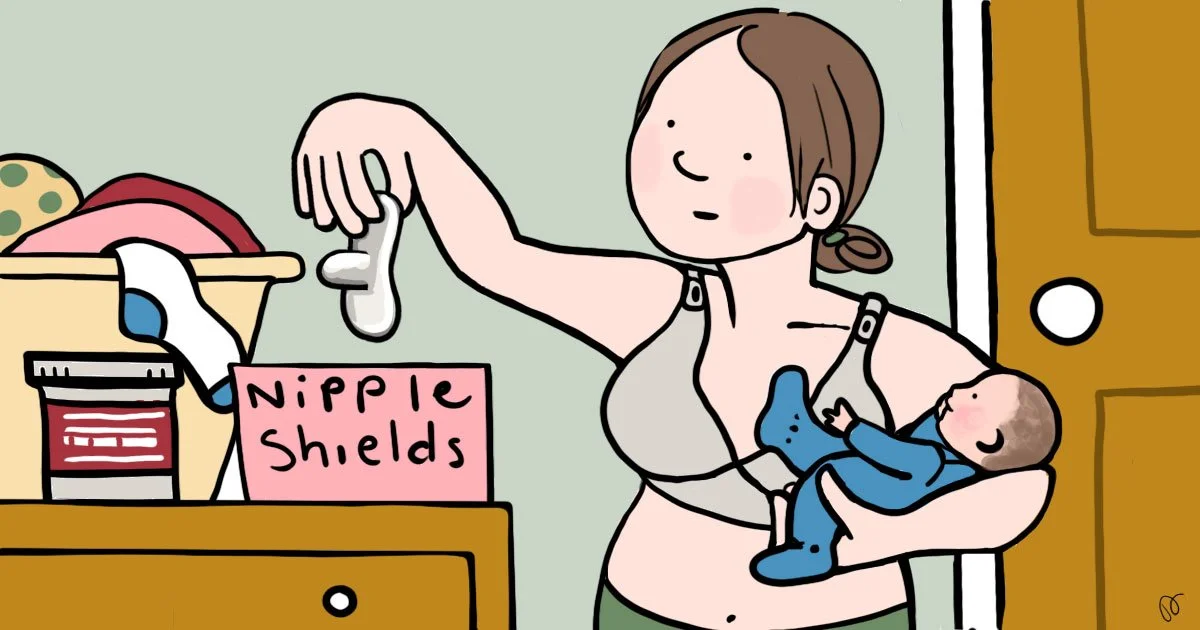
Two women have flat breasts.
One, in her first prenatal breastfeeding consultation, was told by a doctor looking at her nipples, “You’re not getting any milk out of them!
The second was told by a lactation consultant while pregnant that, “It’s called breastfeeding, not breastfeeding.”
I think the first story gives you a deep sense of horror and the second story is good but really, all the women feel sad when they look back on those first conversations.
In both cases, he feels he has been let down. Those conversations bother them.
I get a little nervous when I hear someone blurt out, ‘it’s called breastfeeding, not breastfeeding,’ because it’s always easier. We live in a world where many breastfeeding products feature prominent nipples. If you’re planning on expecting, and you have flat breasts, you’ll be hard-pressed to find a video that shows someone like you. If you are worried about the shape of the nipple in pregnancy, you should talk to someone who listens to those concerns, tells you what will happen in detail and will stand by your side.
Simply saying, ‘it’s called breastfeeding, not breastfeeding’ is like saying, ‘Don’t worry,’ and leave it at that. More to come.
Of course, smooth tops have some drawbacks. It is not right to say that there is no problem. It’s safe to say that you may not need a little extra help. It DOESN’T mean that breastfeeding can’t be good and successful and you won’t achieve your breastfeeding goals but you may need to take more time to find out who can support you in the early days. You may have a little more room when it comes to installation and connections to get started properly.
Babies start breastfeeding when their weaning starts. As the name ‘reflex’ implies, this does not mean that the baby chooses to breastfeed, it is a coincidence. When the roof of the baby’s mouth is touched, the baby starts sucking. A small nipple touching the roof of the baby’s mouth can be a short way to get food to start easily. If the nipple is flat or if the baby has a big mouth, or if both are true, that connection will not be easy. Also, if the child has problems working with the tongue that can make it difficult for him to take the breast tissue inside his mouth and its position. If the nipples do not touch easily, the baby needs to put the breast deep in the mouth and take the breast tissue away from his mouth.
Here is Annabel’s story: “I asked the midwife when I was pregnant the first time if the nipples could cause problems and she said no, so I didn’t make a game plan. I still remember looking at my nipples in the mouth of a tongue-tied baby after birth and realizing that they looked like pieces of two very different jigsaw puzzles. At this point, this would be: three retainers, Latch Assist [a product that temporarily extends nipple shape with suction]trying to feed the baby as soon as it is shaken. Second child tongue-tied last year and nipples went back down, muscles were still rough but of a different mindset than I was ready and feeling confident feeding my first to two – I wish it could!
Discussing flat nipples on Twitter, Gill Rapley, author of ‘Baby-led Breastfeeding,’ wrote, “If the nipple is short, flat or curved, the baby needs to nurse more.” It’s a simple message. When you touch the roof of the baby’s mouth, just a few millimeters further, that reflex starts. So, these are the times to make sure everyone understands that getting a deep latch is important. Every millimeter counts. We can’t afford to throw them away with a child’s hands on the chest, tight clothes, chin not properly connected to the breast or neck. If a child can’t move his head smoothly and leans back, chances are his tongue and chin are where they should be.
What points will we be talking about after, ‘it’s not called a breastfeeding comment’?
1. Speaking of getting a deep latch (Have I mentioned that yet?).
In times when it can be difficult to see breastfeeding in real life, videos are very important. Global Health Media’s ‘Attach your baby to the breast’ is very important. ‘Their First Breastfeeding’ is useful here as at 7 minutes, you will see the baby crawling from the breast and latching onto the smooth nipple. It is important for babies to be stable and secure, but able to move their heads freely. A baby who hangs down on the breast and does not feel supported, has difficulty bringing his tongue to the right position and holding the muscles of the breast where it is needed. If someone is fighting with their child’s hands, then the child can benefit from being more alert so that the hands are no longer the enemy. We want to avoid places where gravity makes life difficult, it could be making life easy.
In her article, ‘Many mothers have been taught to breastfeed incorrectly’, Nancy Mohrbacher explains how posture affects baby’s behavior. We want the baby to be able to do what it needs to do, not fight with the nursing pillow at the wrong height, stick a few fingers together or under the mother who is leaning forward to nurse. Or dealing with a breast that has been pulled and then inevitably returns to its natural position when the hand is removed. Nancy Mohrbacher’s videos on natural breastfeeding can help.
2. Talk about reducing engorgement.
Engorgement is the enemy of those with small breasts. We joke about how a baby latching on to a wet breast is like trying to climb a bowling ball, but when you have loose nipples, engorgement can be dangerous. We needed a baby to take the breast tissue that filled the mouth and we needed the breast tissue to be flexible. If the baby is unable to move the breast above the mouth, it may be difficult. And that’s on top of all the other problems that engorgement can bring in the form of ineffective restraint and discomfort. We want frequent feedings in the first few days. If anyone in the world is still saying, ‘Don’t wake a sleeping baby’, let’s hope they’re not talking to someone with small breasts. We want to talk about softening the back, using cold compresses to reduce fluid in the breasts and other hands before eating.
3. Gastrointestinal manifestations of colostrum.
A lot of people on social media (who I’ve been asking about flat breasts) say they wish someone had told them about prenatal care. It would have helped them in their early days and boosted their confidence. Hand language is a useful skill for those with smooth tips. You can use it to ease sedation, drip to encourage baby to sleep or to trigger the ejection reflex. One of the benefits of prenatal vocalizations is ensuring that the baby’s hands feel smooth and natural when the baby is born. Antenatal expression can occur from 36 weeks and the ABM leaflet is a good place to start: https://abm.me.uk/breastfeeding-information/antenatal-expression-colostrum/
4. Postpartum speech.
Cara: “I think the one thing I wish I had more energy to do is give a little skimmed milk.” I waited until someone told me I could even though my instincts were telling me to do something to drink more milk. Some mothers spoke of receiving the message that early exposure was bad or ‘wait six weeks’ without realizing that if a baby is struggling to latch, the rules don’t apply.
We have these three safeguards: Stay close to the baby, Continue to feed, keep your milk flowing. When latching takes time to settle, it can be tempting to spend a lot of time trying to get it to work, and eventually the baby just falls asleep and everyone is tired. We need food to stimulate the baby to take milk. Sometimes the baby can start trying to feed with the other hand that produces milk in his mouth, fed with a spoon or syringe to get him into the right gear and encouraged to enter.
5. Do breasts grow?
Some breasts are very large. Some can change the shape and feed and display, but in the short term, a few millimeters of height can help. This can mean a specially designed product, temporary pumping with a breast pump, finger painting, a modified syringe or the use of a breast pump. If someone is worried about the shape of their nipples at the beginning of their pregnancy, a change can come. Hormones can change the shape and size of the nipple, but the evidence does not mean that using the products during pregnancy can help.
6. Breast formation.
Breast augmentation can sometimes be dangerous. Sometimes it causes the breast to pass to the baby and is given as if someone is feeding the bottle with the breast. But if we want a child to have a big breast, they can increase the number of millimeters if they do it carefully. Techniques such as C-hold, V-hold or flipple can be useful.
7. Nipple shields.
Again and again, the answers were about the cost of nipple shields.
They can be used for days, weeks or months but are often referred to as stimulating breastfeeding. If we lived in a better world, most of the berry shields would be unused and bought. Advanced breastfeeding support would be available whenever needed and early breastfeeding would be done without a silicone layer between nipple and baby.
However, it goes without saying that we don’t live in that world, and the smell of breast shields can mean that some babies can’t breastfeed. Nipple shields are not the first solution (they are limited because the colostrum gets lost inside and does not reach the baby) but it can have a place. We need parents to understand that growth is very important, not because most stores only have medium.
Sometimes there is a misunderstanding that a large size means a large and long nipple when in fact, we are looking at the diameter of the belly below the nipple. Someone with a flat or curved tip may need a larger size. The largest available appears to be 28mm, available online. Other sizes in the UK, depending on the model, include 14.9mm, 16mm, 20mm, 21mm, 23mm, 24mm. Forget messages about growing according to a child’s mouth; This leads to sore breasts, milk transfer and low milk supply. The nipple will not be pulled loosely inside the shield if it starts to look like a hippo wearing a bowler hat. It should be about a good fit on the breasts.
Placing the shield halfway inside-out, wrapping it around the sides and curing it in place, creates suction that pulls the nipple in and helps the shield stay in place. Some exposure to shield use and continued support from a qualified breastfeeding support provider are essential. Many find that shields become obsolete over time or are only useful at the beginning of a meal.
The mother of the subject was initially told that: “You can’t get any milk out of it” he continued to say“5 years of breastfeeding and three kids later. The nipple shields have changed a lot and I use them differently for all three.”
There is such caution in discussions about nipples. As breastfeeding supporters, the heart of our work is building confidence, providing positive information about breastfeeding and providing encouragement. We won’t be the ones to start with the words ‘Uh-oh, you’re in trouble’ but we shouldn’t be the ones to pretend it doesn’t matter either. Sometimes breastfeeding can mean a lot of challenges and as always, we provide information and build confidence by helping families to be prepared and supported.
This article appeared previously of the Association of Breastfeeding Mothers