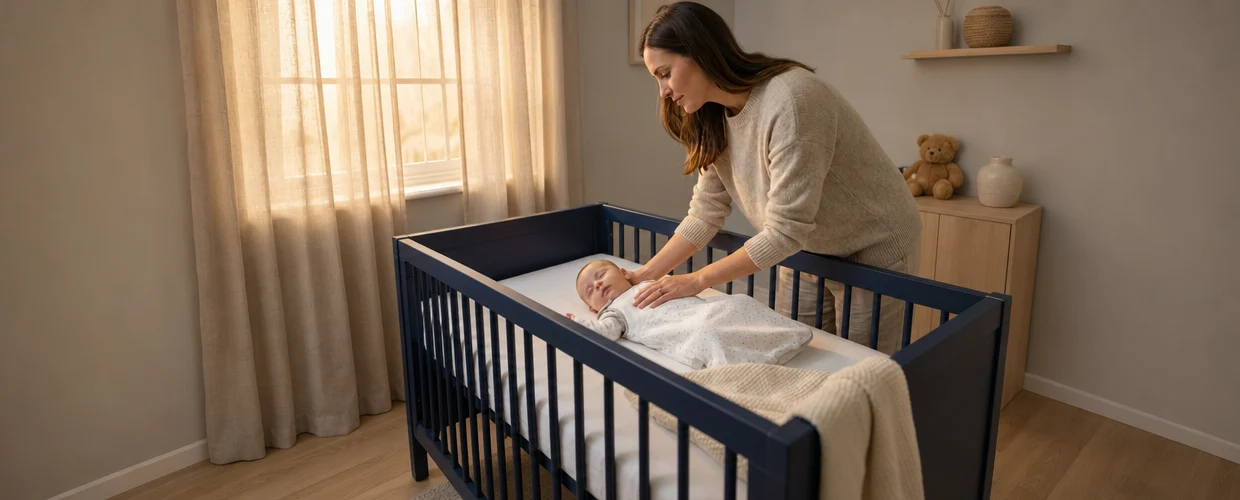
At about eight months, a child who has found a starting point may suddenly wake up again, fall asleep, or get up in bed at 2 a.m. not knowing how to sleep. This eight-month-old sleep cycle breaks down after a few weeks, but it’s very common, and temporary.
One of the most powerful things you can do is be consistent. This book walks you through what an eight-month sleep recovery looks like, why consistency is your best weapon, and how to maintain it, even with summer travel and a busy family calendar.
Table of Contents
- What 8 Months Sleep Looks Like
- Why Consistency Is Your Best Weapon
- How to Maintain Consistent Sleep Every Day
- Staying Through Summer Travel and Disruptions
Expert Summary
- The eight-month sleep cycle is a brief period of two to six weeks of night waking, sleep resistance, and early growth spurts, driven by rapid growth.
- Consistency is maintenance: keep your breathing routine, sleeping position, and response system in place so that your child has one stable anchor.
- Avoid new sleep sticks while you are sleeping, as habits that are formed now can last for several months.
- Teach new skills such as pulling to stand up more often during the day, and protecting sleep to prevent excessive fatigue.
- Summer travel can pile on top of the lows, so stick to what you know best and expect most kids to settle down within a few days of getting home.
What 8 Months Sleep Looks Like
Sleeping for 8 months is a short period, usually two or six weeks, when a child who is already stable wakes up suddenly at night, refuses to sleep, or wakes up early, led by a burst of development instead of anything you did wrong. At this age, babies are learning to crawl, pull to stand, and realize that you are still there when you leave the room, and all mental and physical work ends in sleep.
You may notice your child practicing a new skill in bed in the middle of the night, defying the accepted bedtime, or waking up struggling to settle again. A sense of separation can make them want you more, and an overactive brain can make it difficult to cool down. To get the full picture of developmental drivers, our 8-month-old sleep guide breaks down exactly what’s going on, and more sleep cues help you confirm that’s what you’re seeing.
The encouraging part: this is a sign of progress in health, not a setback that you need to fix from the beginning. Relapses are obvious indicators along the way, and you can recognize the pattern from the six-month regression and see it again in 10 months. Knowing that it’s temporary changes the way you run.
Why Consistency Is Your Best Weapon
Consistency is your most powerful tool during rest periods because it gives your child a stable anchor when growth is difficult. When routine, environment, and your responses are consistent, your baby has less to learn and an easier way to go back to sleep. Anticipation is really comforting for a baby whose brain is working extra hard, so settling down is a really calming task.
The biggest risk in relapse is accidentally teaching new habits that you need to change. Tired and stressed parents reach for every cry tonight, whether it’s a rocking, a new feeding, or bringing the baby to bed.
These savings are tempting, but a habit formed in a two-week retreat can last for months. Whenever you can, answer with the support you would give on a normal night and not with a new stick.
This does not mean neglecting your child. It means to exist in a reliable, predictable way as they already know. Comfort them with the same words, the same gentle hands, the same routine. A child who has self-soothing skills leans on them now, and consistency is what keeps this skill from being destroyed under pressure.

Trusted by 2.5 million parents
Easy Back in 60 days
Good night for you child

To keep sleep from returning, hold four things firmly in place: routine, sleeping position, how you respond, and safe sleep. Choose your route, keep it the same night after night, and give it time to return. Consistency only works if it’s consistent, so avoid changing strategies every few days due to fatigue.
Start with routine and room. Keep to the same routine of bath-pajamas-book-feed-lights-out, and keep the bedroom cool, dark, and familiar. A non-blanket layer reinforces that information. The Zen Sack ™ Classic at 0.5 TOG works all year round, while the slightly warmer Zen Sack ™ Quilted has cooler compartments, and both carry a Cuddle Pad ™, whose pressure adapts to your touch and gives your baby a sense of security through vibration.
Offer new skills during the day. A child who wakes up in the bedroom at night often does not know better on the groundso try it while playing. Guide them from standing to sitting repeatedly until it becomes automatic. The same goes for crawling and pulling up. The more he practices during the day, the less he practices at 2 p.m.
Finally, protect against extreme cold. Being too tired makes the transition worse, turning one rough night into a cycle. Pay attention to the time of sleep, watch the wake-up windows, and do not let the snow jump. If separation anxiety is part of the picture, a little quiet bonding before bed can help say goodbye. Parents report good sleep in just 1-3 nights. According to a 2020-2023 consumer survey of parents using Zen Sleepwear products.
Staying Through Summer Travel and Disruptions
Back-to-back collisions with summer travel, lean more on what you know rather than what’s comfortable. When your child sleeps enough, you go to a new place, all distractions are reduced. The journey during the return is a double change, so consistency is needed more than before, not less.
Bring your child a familiar sleeping place, the same sleeping clothes, and the same routine as the storm, and secure one solid night’s sleep even on busy days. For more information about unsettled sleep at home, our complete guide to baby sleep while you’re on the go fills your itinerary and sets up once you’re back.
Resist the urge to start self-driving habits that you need to change at home, because going back will have you already fighting the line. If you’re visiting relatives or sleeping somewhere unfamiliar this summer, the same principles apply. Keep your movements flexible and your responses consistent.
Once the confusion has passed, get back to your routine. Most babies who had regular support throughout the retreat and journey are stable within a few days of being at home. If sleep hasn’t been achieved well beyond the usual window, our guide to getting your baby to sleep through the night can help you rebuild longer. Hold steady. The retreat will end, and the consistency you have maintained is where your child will return.
Essentials
- Eight months of hibernation is a long period of two to six weeks driven by development (new movement, separation awareness, and cognitive leap), not everything you did wrong.
- Consistency is your best weapon: holding routine, environment, and your feedback steady gives your child a stable anchor.
- Avoid starting new sleep sticks while you are sleeping, as habits that develop here can last for months.
- Teach new skills such as pulling to stand up more often during the day, and protecting sleep to prevent excessive fatigue.
- If traveling is bumpy and downhill, lean more on what you know, then go back to what you do at home.
Sources
- American Academy of Pediatrics – infant sleep and development (healthychildren.org):
- The Sleep Foundation – sleep and sleep recovery for babies:
- Zero to Three – a jump in development and sleep:
- KidsHealth (Nemours Foundation) – sleeping with your child:
Frequently Asked Questions (FAQs)
How long does an 8 month old sleep last?
It is usually two to six weeks. The duration will vary depending on the growth of your child and how the signs are used during sleep. Keeping routine, environment, and your responses constant often cuts it short, while frequent changes in approach make it possible. It is temporary and self-determining.
Why has my 8 month old started waking up at night again?
The explosion of development is usually behind it: crawling, pulling to a stop, and the new realization that you are still there when you leave the room. Mental and physical activity interferes with sleep such as frequent awakenings, sleep resistance, and rapid awakening. It is a sign of health progress, not the regression you caused.
Should I change my routine to prepare for relapse?
No, consistency is maintenance. Be consistent in how you walk, sleep, and how you respond so that your baby has a stable anchor. Changing routines every night confuses your child and adds to the confusion. Choose your strategy, keep it consistent, and give it time.
Why is my child standing up in the crib and crying?
Children often learn to pull up before they learn to go back down, so they get stuck. Try to go from standing to sitting during the day until it’s automatic, which will reduce nighttime practice. At night, gently help them with the same words and gentle hands each time instead of starting a new routine.
Can a sleeping bag help during rest periods?
Consistent, well-defined sleep reinforces the sense of “sleep time” when everything else is out of whack. The Zen Sack ™ Classic works all year round at 0.5 TOG, and the warm Zen Sack ™ Quilted has cool compartments, and both carry the Cuddle Pad ™, whose gentle pressure mimics your touch to help keep your baby safe during difficult transitions. It is one stable anchor among several.
How do I maintain consistency if we travel during the retreat?
Carry what your child is familiar with (the same bed, clothes, and routine) and stick to just one nap a day. Avoid habits that you will have to change later. Then go back to your normal routine as soon as you get home. Most children who have had regular treatment with both are stable within a few days.