
There is nothing more heartbreaking than feeling like a stuffed baby.
Unlike you or me, our little bundles of joy can’t blow their noses.
Their first cold is an unpleasant experience that all parents experience. But there are ways you can make it easier for them.
So what can you do to help them?
By far, the best way to help a stuffy baby, in my experience, is a nasal aspirator. But you don’t want to use one of the bulbsities you may have received.
He looks like this.
Why do I hate them? Well, for one thing, they don’t work well at all. You have to pump them by hand, so you have little control over the amount of suction you are using.
Not only that, but they get it shit inside. It’s impossible to clean them properly, and I’ve seen interesting things inside that no one should see.
Trust me, it’s bad.
Nosefrida: godsend for full babies.
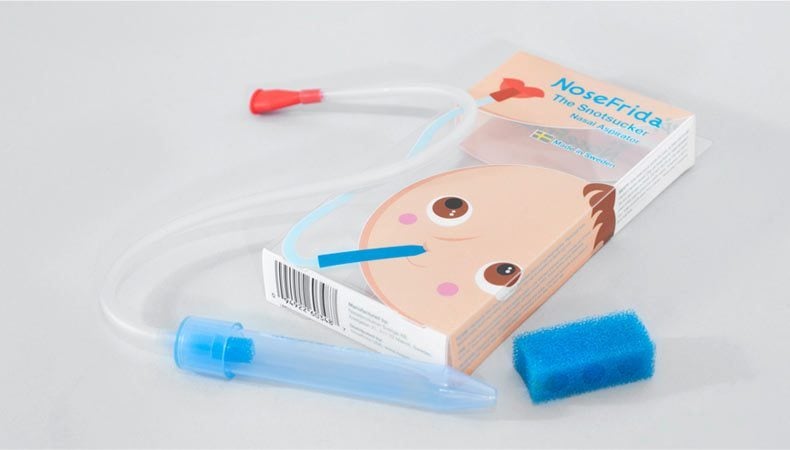
On the other hand, NoseFrida: The Snotsucker (click here to see price on Amazon) it’s amazing. It’s the best nasal decongestant you can find, period.
Basically, you put the end in your child’s nose, and you suck on the other hand.
It sounds gross, but trust me, you don’t get boogies in your mouth. It has a filter to catch them.
Best of all, you can control the suction more effectively, because you’re using your lungs instead of a wonky bulb and your hands.
Treat yourself (and your child!) to a great treat and find Nosefrida. You won’t regret it.
You can read my full post on it right here.
Six Other Ways You Can Help Your Obese Child
Saline nasal drops can help reduce mucus and clear the airways.
You simply put a few drops in each nostril, and use a fresh breath to remove it. You can do it as often as you want; It’s not dangerous, and you can’t do it often.
This method tends to work best for young children, under six months, as older children tend to struggle with it, making it difficult to use the drops.
The Whole New Mom has a great post on how to make your own saline drops, if you want to go that route.
This video shows how to properly administer saline drops to your baby.
A nursery humidifier can do wonders. But just get cool moisture, not warm mist. Not only will it help the mess, but it can help prevent getting sick in the first place.
Studies have shown that probiotics can reduce a baby’s risk of respiratory infections. Kellymom has a great article on giving probiotics to toddlers and babies.
Wearing your baby in a sling (in an upright position) can help with a runny nose.
Massaging the nose can help clear the air and clear it. This YouTube video shows how to do it for an adult, but it works for a baby too.
Steam bath. I love these things. It’s a mixture of ingredients that contain menthol, rosemary and eucalyptus, and when you add it to your bath water, it’s released into the air, refreshing and clearing baby’s nasal passages. It boils, and does not sting if it gets into their eyes. Take action!
What to do
According to Babble, you should not give children under 4 cough medicine. It would be dangerous for them, without any benefit. Studies have shown that although this medicine can help dry nose in adults, the side effects in babies are to make them sleepy.
On top of that, the effects of pseudoephedrine on infants have not been studied extensively. It often causes high blood pressure in adults, and is one of the reasons it should be avoided in babies.
Do not prevent Diseases
Remember that a stuffy nose is a sign of something, not just a condition. It usually means they have a cold or flu.
If you think they might be sick, don’t hesitate to take them to the doctor.
When should you worry?
- Your child seems to have a fever.
- Their pauses seem long.
- He can’t sleep.
- He has a constant problem with food.
If your child seems to be having any problems, you should take him to the doctor or the ER right away.