 Skip to content
The Importance of Hydration for Mothers and Babies – by Dr. Poornima Shankar
Summer is in full swing and one of the most common questions we get is how to ensure that children are not dehydrated.
Recently, Himalaya Baby Care invited Dr. Poornima Shankar, Sr. Research Scientist & Nutritionist to discuss this topic on their Facebook page. I cannot miss such an opportunity to listen to an expert on the topic of hydration in women and children.
Here is a summary of what I learned in this session.
- While hydration is important for everyone, there are some parts of life that are more difficult and challenging they need hydration.
- The body is made up of 45-70% water and in children and babies it is even higher.
- Water is needed for every function of the body such as carrying water, lubricating the bones etc.
- The need for water varies according to age, activity and other factors. But an adult needs 8-10 glasses of water a day.
- Water is not stored in the body unlike other foods, so a person should drink enough water every day to eliminate the loss of water caused by sweating, urinating, face etc.
Who needs water?
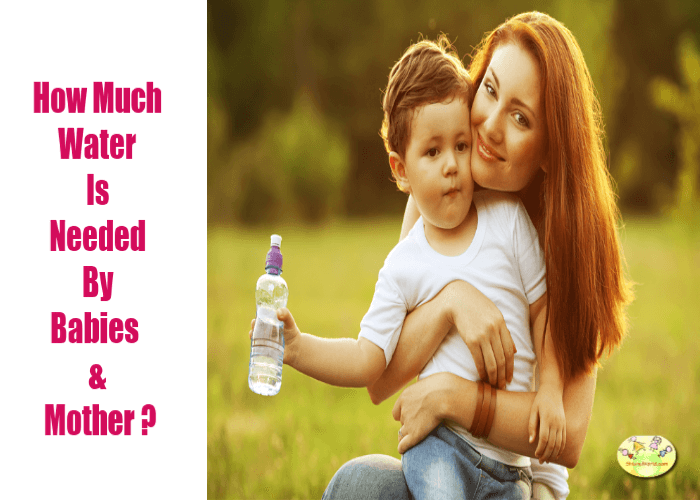
How Much Water Does a Baby, Kids & Mother Need?
| Age | Water Needed for the Day |
| Babies (0-6 months) | 0.7 liters |
| Infants (6-12 months) | 0.8 liters |
| Young children | 1 liter |
| 5-10 years | 1.5-2 liters |
| Men | 1.2-3 liters |
| Women | 2.2 – 2.8 liters |
| Nursing Women | 2.5-3 liters |
| Pregnant Women | 2.5-3 liters |
What happens when you don’t drink enough water?
- Even a small loss of 1% of the body’s required water can cause symptoms such as dizziness, convulsions, dry mouth, irritability and an increase in body temperature.
- Thirst usually starts when you lose 0.5-0.8% water.
- Dehydration can be a problem for young children because they often do not realize that they are thirsty or that they need water.
- 10% dehydration can damage the body’s functions.
- 20% dehydration can cause death.
What are the consequences of insufficient water intake for pregnant women?
It is very important for pregnant women to stay hydrated.
- Dehydration in pregnant women can be dangerous and can also lead to premature delivery.
- It can also cause a UTI or urinary tract infection.
- It can cause constipation.
- Not getting enough water can also cause kidney stones.
How much water do babies/toddlers need?
Babies who are exclusively breastfed do not need high amounts of water because breast milk is 87% water and provides enough water for their body. It is also very clean and there is no danger of bringing dirt into it.
But in some cases when the child may lose a lot of water, such as high fever or diarrhea, you can give clean boiled water.
How do you know if a child is dehydrated?
Babies can’t talk so they can’t tell you when they’re thirsty. But there may be other symptoms Loud crying, skin rash, fever and low urine output. If you see diapers that are a little more wet than usual that could be a sign, but the best thing is to take the child to the doctor who can check if the child is suffering from dehydration and give him the proper advice.
What foods and drinks should be given to a child in the summer?
They encourage children to have water and not energy drinks or sugary drinks.
Also, young children should have plenty of nutritious and nutritious foods such as fruits and vegetables.
Milk also keeps babies hydrated and provides them with nutritious food, so milk and milk are good for them.
What if a child has dry lips in the morning despite drinking enough water?
It may be due to the cold air that dehydrates and makes the skin and lips dry. You can apply moisturizer or lip balm before going to bed. Also, offer a glass of water as soon as the child wakes up.
Can breastfeeding mothers have too much water to make the milk thin?
They don’t believe that hydration is a problem because the body has enough ways to get rid of excess water. In fact, having less water can cause less milk.
How can one treat dehydration in children and adults?
ORS or oral rehydration solution should be given to replace water and electrolytes in the body when a person is dehydrated.
Coconut water is an excellent source of electrolytes and it contains many minerals that the body needs. He recommends that everyone drink fresh coconut water when available.
In short, it was an enlightening session where I learned a lot about hydration and I’m happy to share it with you all. Water is life force and we must remember to fill our body with water and let it go when it starts asking for water by showing signs of dehydration.
