 Skip to content
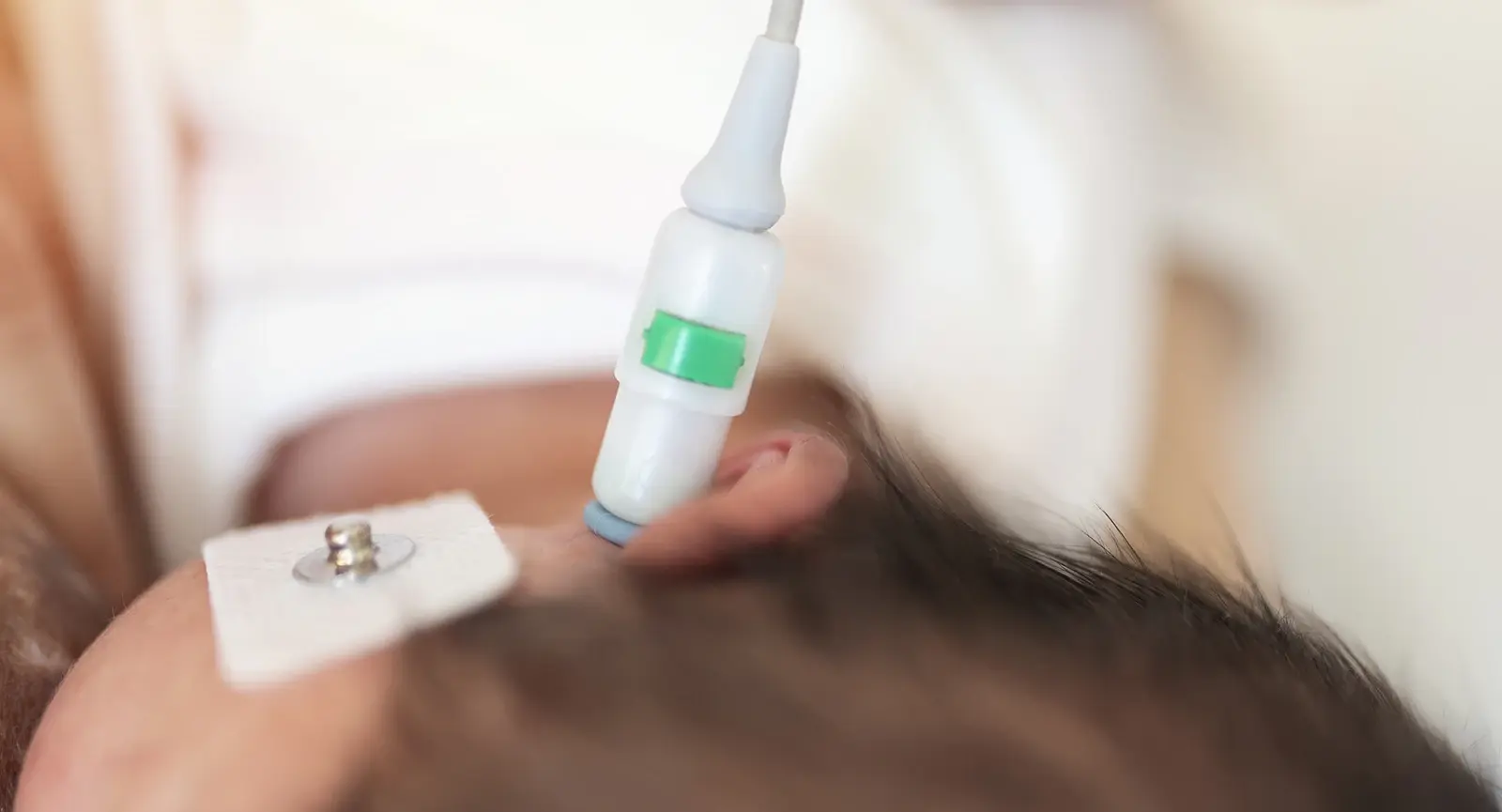
Your baby’s hearing is evaluated as soon as it arrives in the world. Most newborns have their ears checked before they leave the hospital, and the test is quick, painless, and usually only takes a few minutes.
If your child does not pass the first test, try not to panic. This does not mean that they are hearing impaired. Sometimes babies don’t pass because they sleep, fuss, or still have fluid in their ears after birth. It means that they will need to reevaluate their hearing to get a clearer picture.
Advertising | page continues below
This should be done before your baby is one month old. If they do not pass the test, the next step is a hearing test by a specialist, preferably as soon as possible and within three months.
Getting answers early can make a big difference, helping your child get whatever help they need at this important time.
Essentials
-
Most newborns have their ears checked before they leave the hospital. It’s a quick, painless way to see how your baby reacts to noise and spot potential problems early.
-
If your child does not pass the first test, do not panic. It is common for babies to need repeat tests – things like fluid or movement can affect the results. The important thing is to keep a close eye on the one-month-old baby.
-
Early screening can protect your child’s development. Diagnosing hearing loss early helps your child get the right help to learn, communicate, and thrive – now and in the long term.
What is a newborn hearing test?
Newborn hearing screening is a test that detects deafness or hearing loss in babies.
Screening involves one or two quick, painless tests. Most babies are examined at the hospital soon after birth. If a child fails the hearing test, they are referred to a pediatrician for evaluation and diagnosis.
Early diagnosis of hearing loss is very important. Although rare, hearing loss affects between two and three out of every 1,000 births in the United States. Hearing is very important for your child’s ability to learn and communicate. Identifying any hearing problems as early as possible helps babies receive strategies that help them develop their speech, language, social, and academic skills.
Many hospitals offer newborn screening as part of their newborn screening process. If you’re not sure if your baby’s hearing was tested after birth, call and ask. If not, or if your baby was born at home or somewhere else without a hearing test, ask your pediatrician about a hearing test within the first month. This is important even if your child is not at risk of hearing loss.
How is a baby’s hearing test done?
There are two types of newborn hearing tests completed by a trained examiner. Each one takes only five to 10 minutes and is painless. Many children fall asleep when they are weighed. Presentations include:
Advertising | page continues below
- Brain imaging system (AABR). This tests how your child’s auditory brain responds to sound. Soft earphones are placed in your child’s ears and make clicks or sounds. Sensors are placed on your child’s head to measure his brain activity in response to sounds.
- Otoacoustic emissions (OAE) screener. This measures the sound waves produced by the inner ear. A small device sits in your child’s ear that emits low-pitched sounds, and a computer connected to the device analyzes the ear’s response.
Some clinics use only the ABR machine or only the OAE, while others start with the OAE and follow up with the AABR if your child fails the OAE test.
What happens if my baby fails the hearing test?
If your baby doesn’t pass the newborn hearing screening, it doesn’t mean he has a hearing problem. It does mean that more testing is needed, though.
It is important that your child receives a follow-up examination as soon as possible, and before the age of three months. Most babies who fail the first screening go on to have a follow-up screening.
Advertising | page continues below
Reasons why children may fail the first screening may include:
- Fluid in the inner ear
- Debris (such as vernix) in the ear canal
- There is a lot of noise in the room or they are moving or crying during the exam
If a child does not pass the initial hearing test, they may be tested again before leaving the hospital.
Babies can also be re-examined after one or two weeks at the outpatient clinic or sent to a pediatric audiologist (audiologist) who will perform a thorough examination to see if your child has a hearing problem, the need for it, and what can be done to help.
You can ask the clinical screening program and/or your pediatrician for a referral to a pediatric audiologist who has experience in newborn screening.
Advertising | page continues below
👉 Stay on top of every new born event. Track what your baby has seen, tracked, and more in the BabyCenter appIt will open a new window.
If my child passes the hearing test, will he still have hearing problems?
Yes. Newborn screening tests may not detect mild hearing loss or other types of hearing loss, so an advanced newborn screening does not mean that the baby’s hearing is perfect.
For example, it is possible for a child to pass a newborn hearing test but have little to no hearing. A child can also hear well at birth but becomes deaf as they get older.
Delayed hearing loss can occur for a number of reasons, such as diseases such as frequent ear infections, viruses, meningitis, head injuries, genetics, exposure to certain types of drugs, or exposure to loud and prolonged noise.
That is why it is important that you always make sure that your child is listening. Most children receive follow-up screenings at their 4th, 5th, 6th, 8th, and 10th birthdays.
Advertising | page continues below
If you are concerned about your child’s hearing, or if your child has serious reasons for delay or loss, ask your doctor to refer you to an audiologist for further testing. Know the warning signs of hearing loss, such as if your child:
- Does not startle with loud noises by 1 month, and/or does not turn to sound by 3 to 4 months
- They only recognize you when they see you
- Delayed speech (for example, if they don’t say words by 12 to 15 months)
- They don’t answer when you call them
- It focuses more on vibrational noises than other noises
- They seem to be hearing some voices but not others
- It seems that they are not happy when you read them
If you notice any of the signs of hearing loss or are concerned about your child’s hearing for some reason, contact your child’s pediatrician. The good news is that early detection of a problem means your child will get the help and support they need as soon as possible. Having hearing loss diagnosed early can ensure that your child’s language and speech development are not severely affected in the long run.