 Skip to content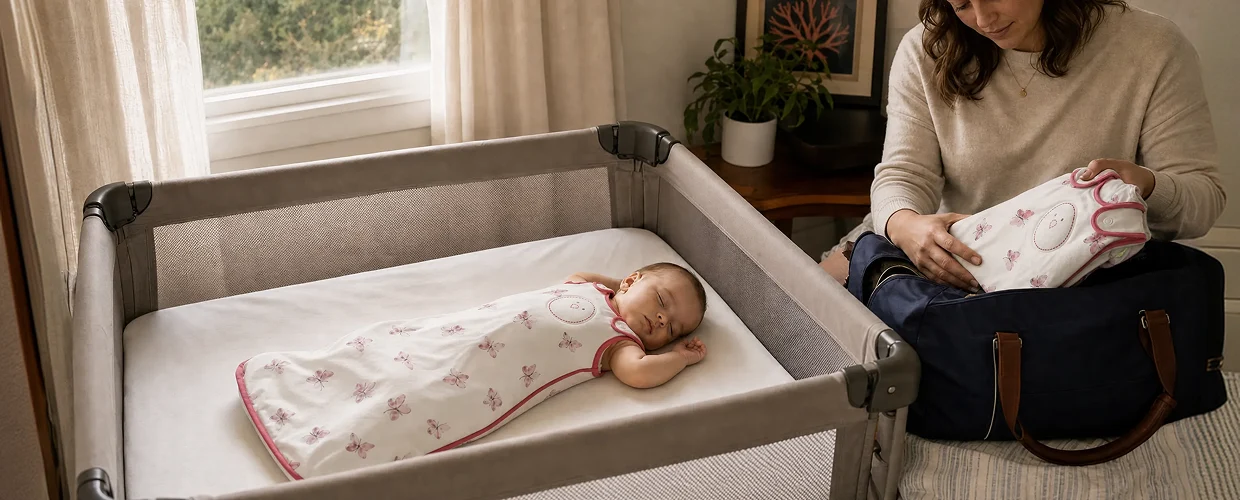
A hotel room, a rental, a friend’s living room, or even another room in your house. For your child, sleeping away from home is a new experience that is coming to an end. The light is different, the sound is different, the bed feels new. No wonder bedtime is difficult.
The good news is that sleep deprivation is a treatable problem. Sleep is built on information, and signs carry it. This book shows you how to build your child’s bedroom almost anywhere. Light, noise, surfaces, and familiar parts that you travel with can help your baby sleep away from home.
Expert Summary
Babies spend a lot of time away from home because almost everything they sleep in changes at the same time: light, noise, temperature, and sleep all change overnight.
A child who reads the world using conventional methods has a lot to take in, and the stimulation of the day often leaves them unwired.
Planning and rebuilding the accommodation: controlling the light and darkness, masking noise and sound systems, providing a safe place to sleep, establishing a good temperature, and bringing the right clothes and the right way to breathe. Repeating these signals tells your baby’s body that it’s time to sleep, even in a new room.
Give the first night grace. Most children are better settled by the second or third night when symptoms have subsided. With the right portable setup, learning to sleep away from home is easy for both parent and child.
Why Babies Sleep Worse in Unfamiliar Places
Babies have trouble falling asleep in an unfamiliar environment because travel changes almost every sign of sleep at the same time. Light, noise, heat, and sleep all change overnight. When everything changes at once, your child has a lot to do. Add in the excitement of the day, and they end up being wireless instead of tired.
It’s not that your baby doesn’t sleep well when traveling. The problem is simple: the signs changed. And the good news and signs can be rebuilt.
Adults do not recognize these changes. But babies depend on the consistency of the environment more than we do. The unusual ceiling, the sound of the street, the room lit at 8 o’clock in the afternoon, and the unknown mattress all indicate “new.” What is new is the opposite of the calm, predictable emotions that allow babies to be absorbed. Add a fun day on top, and bedtime becomes a real battle.
It tells you what to fix. If the problem is reversed, the solution is to repeat what your child already believes. You can’t make a hotel room your nursery, but you can make it stand out. Dark enough, quiet enough, and familiar in the ways that matter.
If you’re not sure if you’re experiencing travel disturbances or something else is developing, sleep apnea symptoms can help you separate them.
Make Accommodation Simple
A flexible shelter depends on five things that can be controlled: light, sound, shelter, temperature, and awareness. Take a small piece of everything, and you can set up a functional bedroom in almost any room in minutes. This is your biggest tool for helping your child sleep away from home.
The first light. Long evenings and bright rooms cause many problems away from home. Stick to black leather, or use large black bags and masking tape. Make the room as dark as your baby’s home nursery, as light is the most powerful signal your baby’s brain uses to tell you when it’s time to sleep or when it’s time to wake up.
Then it’s clear. A walk-behind audio system or a white noise program on a small speaker will mask unusual street noises, traffic, plumbing, and household noises that may wake your child. The constant sound also serves as a clue: the same whoosh he hears at home tells him where he is, even in a new room.
So sleep on top. A flat, empty, safety-approved bed or bassinet gives your baby a stable, safe place to sleep every night, anywhere. Well-designed structures lose flexibility and are not built for children to sleep well. A travel bed your child already knows does two things: it’s safe, and it feels good. A child who can self-soothe will settle into it very quickly.
Recreate Symbols Your Child Already Knows
The most important signs are what your child wears and what you follow. Popular clothes and similar ways to get on the floor go everywhere and do a great job. When the same sleeping bag continues, and the same steps appear, your child’s body gets the message that sleep is coming, regardless of the surrounding room. Knowing this is very important to help your child sleep away from home.
The heat pushes many parents to a new place because hotels and rentals are hot or cold and often out of your control. Match your child’s clothing to the room temperature, not the weather. In a warm room, the Zen Sack Premier’s breathable bamboo at 0.3 TOG keeps your baby cool while maintaining the pressure of the Cuddle Pad that absorbs your touch. For a child who takes off the covers, Zen Footie) keeps the chest soft while opening up the legs. Wear pajamas of the same style in the right weight for the season, and the label stays the same even if the warmer is off.
Start your breathing routine as you would at home. Bathroom, bed clothes, book, food, lights are turned off in the same way. Children stick to a sequence more than they stick to a clock.
Use whatever comforter your baby already likes, and your routine should be the same. If Childhood Adventures: How Different Stages of Development Affect Your Baby’s Sleep has extra wires, rely more on what works. Parents report getting a good night’s sleep in just 1-3 nights. (Based on parent feedback from 2020-2023 using Zen Sleepwear tools.)
Settling Your Baby in a New Room, Night and Night
Expect the first night to be rough. Give yourself and your child grace.
Most babies settle down well after 2 or 3 nights when the symptoms of the new room start to feel better. Knowing this ahead of time helps you avoid overcorrecting after one bad night and accidentally creating a habit you’ll stick with for weeks to come.
When you arrive, prepare the bed before your child is tired so that it is ready and dark by bedtime. Stay awake a little together in the room during the day so that it is not completely unusual for the lights-off. Then run your pacifier and put your baby down asleep but awake, just like at home. Familiar clothes, clear voices, a dark room, and your usual activities will help your child fall asleep away from home.
If your baby wakes up more than usual on the first night, respond as you normally would. Don’t adopt a new trick like another swing or lying on your bed if it’s not your move. Emergency plans turn into habits quickly.
How to get your baby to sleep quickly and how to help him sleep longer also applies to the new room.
When you get home, go back to your normal routine. If sleep needs to be worked on when you return, our guide to helping your baby sleep through the night can help. The room may be new, but what you do doesn’t have to be.
Essentials
-
Children sleep worse in unfamiliar environments because many cues change at once: light, noise, temperature, and sleeping position. It’s not because they walk badly.
-
Create a living space that controls five things: light, noise, safety, temperature, and what you’re used to.
-
The most portable signs are the well-known clothes and the matching floor plan. They travel everywhere and help your child sleep away from home with ease.
-
Match the clothes to the room temperature, as hotels and rental places can’t control how hot or cold they are.
-
Expect the first night to be rough and give yourself some grace. Most babies settle on the second or third night, so avoid bringing new sticks that you have to loosen.
Sources
- American Academy of Pediatrics, Safe Sleep Guidelines:
- Sleep Foundation, How Nature Affects Sleep:
- Centers for Disease Control and Prevention, Travelers’ Health:
- KidsHealth and Nemours Foundation, Sleep with Your Baby:
Frequently Asked Questions
Why won’t my baby sleep in the new place?
An unknown room changes almost every aspect of sleep at the same time: light, sound, temperature, and sleeping position. A child who reads the world habitually has a lot to hear. The stimulation of the day often leaves them wired instead of tired. Rehearsing what your baby already knows makes the new room familiar enough for him to sleep in. This is the foundation for helping your child sleep away from home.
How can I make a hotel room suitable for sleeping children?
Take five steps: darken the room, mask noise and vibration, use the safest bed you can walk in, set the temperature right, and bring familiar clothes and routines. Prepare the place before bed so that it is dark and ready. The more familiar the room, the easier it will be for your child to learn to sleep away from home.
How long does it take for a child to get used to a new room?
Be prepared for the first night to be very difficult, with a noticeable improvement by the second or third night when the symptoms in the room are known. Staying awake for a bit in the bedroom during the day helps. Avoid overindulging after a rough night, which can lead to habits you need to change. Most children get used to it quickly when the shelter is in place.
What should my child wear to sleep in a room where I can’t control the temperature?
Match the layer to room temperature, not the weather. In a warm room, the Zen Sack Premier’s breathable bamboo at 0.3 TOG keeps your baby cool while keeping the Cuddle Pad on cue. For the active footballer, Zen Footie keeps chest and leg pressure free. Keep the same sleepwear in a travel weight.
Should I bring our own travel mug or use the one provided?
Bring a playpen, empty, compatible with the safety that your child has slept in before as much as possible. It provides a consistent, safe environment every night and doubles as an iconic landmark. The curtains offered vary in terms of security and comfort, so your familiar setup is the most reliable option for security and stability when you need to help your child sleep away from home.
My son is sleeping well and walking but now he is not well since we are home. Why?
Coming home is a change, so settling in for a night or two is normal. Return to your home routine immediately instead of relaxing, and use the bright mornings and dark evenings to reset. Most children are back to normal within a few days. If it continues beyond that, consider it possible to return.