Milk and babies go hand in hand. After all, babies need milk to grow well.
We all know breast milk, dairy milk, cow’s milk – but where does almond milk fit into the mix?
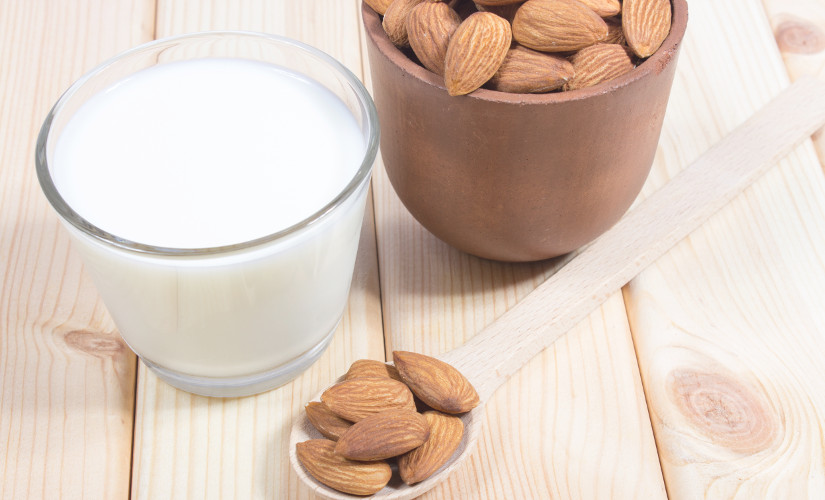
Almond milk is a plant-based milk made from almonds mixed with water. Wikipedia explains, “It does not contain cholesterol or lactose, and is often eaten by people who are lactose intolerant and others who want to avoid dairy, including animal.” It comes in a variety of colors, both sweet and unsweetened.
We know almond milk is delicious, we’ve heard it’s healthy…
In short, yes and no.
Can children drink almond milk? Yes. However, don’t think about giving almond milk to your baby until after their first birth, and even then there are some things you may want to consider first.
Read on to see if almond milk is good for your baby.
Under one? Don’t jump the gun.
In most cases, it is recommended that you wait until your child is one year old to find out each one some type of milk other than breast milk.
As noted by MedlinePlus, a healthy diet is essential for your growing baby, and he or she must consume vitamins, minerals, and healthy fats for optimal growth. Breast milk or breast milk provides the nutrients your baby needs to grow and stay healthy in their first year.
Everything Some types of milk may not provide enough nutrition for a baby under 12 months, including cow’s milk. According to BabyCenter, “Babies cannot digest cow’s milk as completely or as easily as breast milk or formula. Cow’s milk lacks vitamin C, vitamin C, and other nutrients suitable for infants.” It also does not provide the normal amount of fat that growing babies need.
Healthline explains that almond milk may not provide enough nutrition for a growing baby. Almond milk is low in calories and fat, which may be appealing to adults, but babies need healthy fats in their diet to promote healthy brain and bone development. Almond milk may not provide adequate levels of the healthy fats that are needed in their first year.
After their first birthday.
When your baby turns one year old, most doctors recommend switching to cow’s milk altogether. During this time their bodies are able to digest whole milk, in addition to eating solid foods.
BabyCenter explains that milk is very important for a growing baby because, “milk contains a lot of calcium, which strengthens bones and teeth and helps blood flow and muscle function properly.
Babies of this age drink about 16 to 20 hours of milk a day.
Obviously milk is a big part of their diet and is full of all kinds of nutrients your baby needs, but what if your baby can’t eat milk or lactose, or your family is looking for a vegan alternative? That’s when you might consider offering almond milk instead of cow’s milk.
Changing the almond milk.
If you’ve made the decision to try almond milk, it’s important to make sure your baby’s diet also contains more of the healthy fats, vitamins and other nutrients that can come from drinking regular milk. Choose full-fat almond milk whenever possible, as well as sugar-free varieties to avoid added sugar.
Although almond milk may not be your first choice, it is rich in vitamins and minerals, including vitamins A, E and D, manganese, magnesium, phosphorus, potassium, selenium, iron, fiber, zinc and calcium.
Healthline explains, “The best nutrients in cow’s milk are protein, calcium, vitamin A, and vitamin D.” If you compare almond milk to cow’s milk or breast milk, both are high in vitamins A and D, but almond milk may lack enough protein and calcium in comparison.
Your child’s diet will be complete with a variety of solid foods at this age, which will provide enough protein. However, a toddler does not always get enough calcium, so he needs milk. Fortunately, most almond milks are fortified with calcium to match cow’s milk, making almond milk acceptable.
As with all new foods and drinks, start slowly. Your baby may not like the taste of almond milk at first. In this case, you may want to consider mixing it with breast milk or the medicine she is already taking until she is used to it.
Pain or intolerance?
One of the reasons parents look to almond milk instead of cow’s milk is because of allergies or lactose intolerance.
It is important to understand the difference between intolerance and prejudice.
Food Allergy Research & Education explains, “A food allergy is an overreaction of the body’s immune system to specific food proteins. The side effects can be dangerous and even fatal.”
Food intolerance does not affect the immune system, but the inability to digest certain foods. Food intolerances can cause problems, but they are not life-threatening.
With a milk allergy, the protein found in milk is the main issue. These come in the form of casein and whey. According to Food Allergy Research & Education, “Cow’s milk allergy is the most common allergy among infants and young children. About 2.5 percent of children under the age of three are allergic to milk.” Fortunately, most babies outgrow their milk supply as they get older.
Food allergy symptoms include:
- Corruption
- Hives
- Itching
- Swelling
- Difficulty breathing
- Breathing
- Loss of knowledge
- Anaphylaxis
If your child has these symptoms after drinking milk, seek help immediately.
Lactose intolerance refers to the inability to digest lactose, which is the sugar found in dairy foods. Discomfort occurs immediately after taking this medicine.
Symptoms of lactose intolerance often include:
- Nausea
- Gas
- Swelling
- Diarrhea
- Abdominal pain
- Abdominal pain
Although almond milk does not contain lactose, gluten, casein, and cholesterol, it is important to remember that nuts are the most common food that causes disease. Therefore, it is possible that your child may have a problem with almond milk. Always be careful when introducing your child to new foods or drinks.
In short.
Almond milk can be an adequate substitute if cow’s milk is not an option for your baby.
If you are considering giving almond milk to your baby, please make sure you don’t do it until now after their first birthday.
Babies need the right amount of vitamins, minerals, and fats for proper growth, which are best provided by breast milk or formula before the age of one.
As always, it’s best to consult your child’s doctor before making any changes to their diet.
Comment from the author.
This news has come to me, as my daughter has just turned one year old and is unable to eat milk due to allergies and intolerances. He has been on a special formula called Elecare for most of his life, which is a complete hypoallergenic, amino-acid based formula.
We tried all kinds of brands before finding Elecare, including some that were known to be hypoallergenic and still responded. So when her first birthday came around, we knew a revolution that could revolutionize whole milk was coming and we didn’t know what to do.
Being almond milk drinkers at home before, my husband and I talked to our daughter’s pediatrician at her 12 month visit about reintroducing her to almond milk.
He confirmed that this was an acceptable method, as long as the almond milk contained calcium. My daughter also gets extra vitamin D, which is often recommended for those who don’t drink whole milk. In addition, we make sure that he is getting adequate sources of all the necessary vitamins, minerals, proteins, fats, etc. in other parts of his diet.
So for those with babies who cannot drink cow’s milk, don’t worry! I’m in it too, and now I know that almond milk is an acceptable alternative.