 Skip to content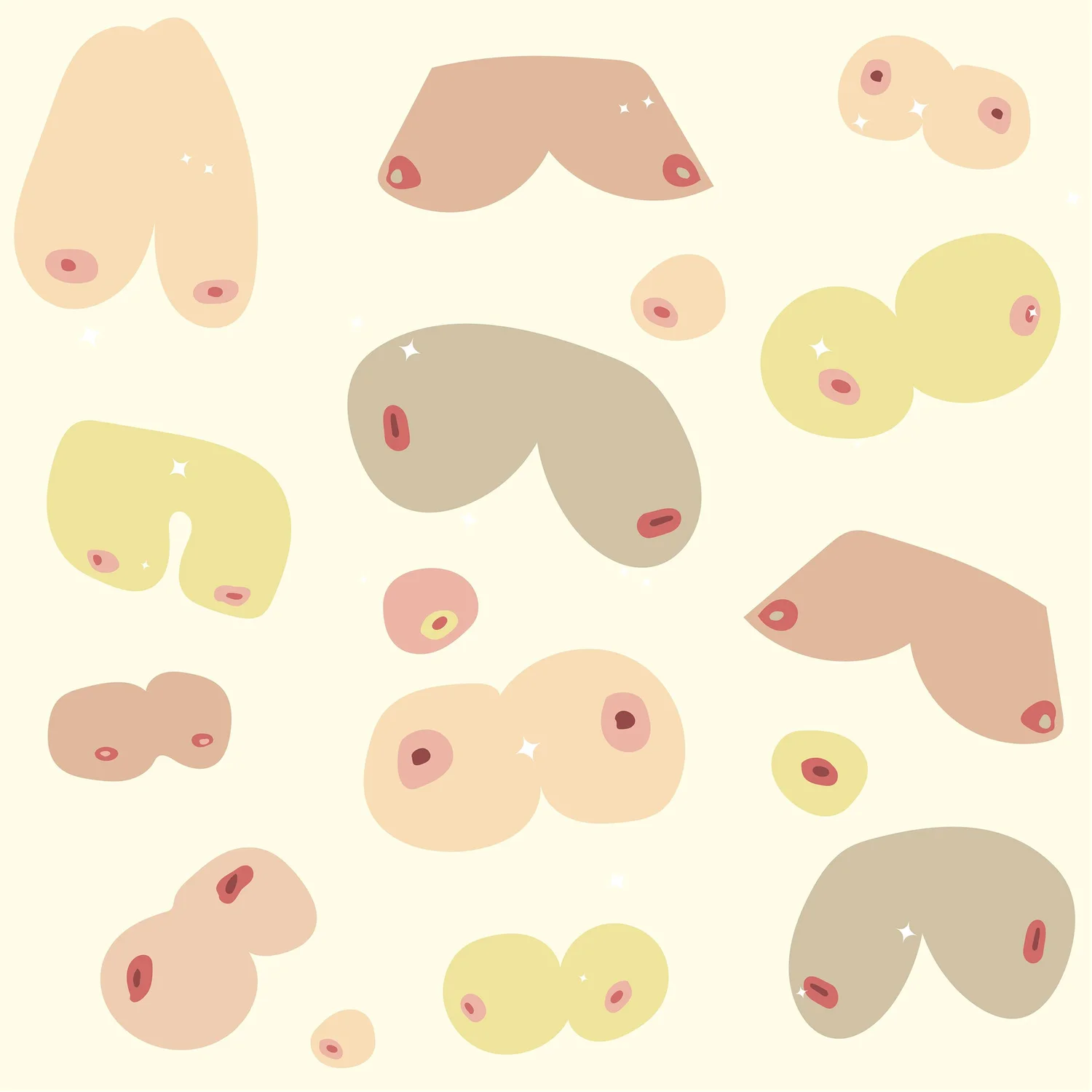
After a long wait and extensive consultation with more than 11,000 responses, the Department of Education released its updated guidance on Relationships, Sex and Health Education a few weeks ago. From 2020, relationships education is compulsory in all primary schools in England and sex and relationships education is compulsory in all secondary schools.
As the chair of the Association of Breastfeeding Mothers and someone who writes about breastfeeding parents and young people, I predict jumped on the computer minutes after his announcement and searched a document of fifty pages the word ‘breast’. There are zero answers.
Disappointing.
When menstruation reaches 13, it has its own small head.
The PSHE Association’s policy is recommended as a tool for use in schools. Let’s explore there. A career plan that covers children ages 5 to 18. Anything related to breast development, breast function?
There are three meanings of the word bere: two are about self-examination. Girls are taught when their breasts are dangerous and dangerous, but not when they are healthy and functional. The final text in Key Stage 4 (14-16 year olds) talks about “parenting skills … to be able to make decisions about raising a child including breastfeeding issues.”
‘Breastfeeding issues’: there are words that don’t warm your heart’s core. Those of us who work to help new families feed their babies can tell you something about breastfeeding. Girls are growing up not knowing how their bodies work. They don’t know how the breasts start to grow, so they spend months thinking they have cancer (because that’s the only time soft, firm breasts are mentioned) or they’re undiagnosed. They are taught that breasts should be hidden and nipples should be invisible. But disturbingly, women who present themselves in other ways often seem to be more attracted, especially on social media.
Girls rarely know that their breasts go under their armpits. They can’t use the word for the ring of skin around the nipple (areola) and they don’t really know how to say it. It is known that this is a national problem where three different pronunciations are considered acceptable: arry-oh-la, a-ree-oh-la, uhrowla. They don’t know the simple facts about how their body will affect milk in the future or that breastfeeding is not about producing milk, but about comforting, building relationships and reducing the risk of maternal mental illness.
The guide says it promotes good relationships, good mental health and says it’s important to parenting. But there is a big hole – and it is shaped like a breast.
If good breast development and breastfeeding are not discussed in schools, we see the results a few years later parents are expected to gain all the knowledge and confidence between finding the expected baby and its arrival. In 2017, the Royal College of Paediatrics and Child Health requested the government to install breastfeeding facilities in the school and the request was ignored. Not everyone should drink. Some women don’t want to, and some women can’t, but we know that about 80% try to start and more than ¾ of them are frustrated because of the lack of help. We could have a country with the lowest breastfeeding rate in the world.
The new courses deal with real problems: forced marriage, honor killings and FGM. Children should be taught about the treatment of sexually transmitted diseases and that alcohol and drugs can lead to bad sexual behavior. They are taught birth control and abortion, but not fed. In Scotland, we can see places where breastfeeding is part of the curriculum and schools can also be given access to breastfeeding. Why is England not joining the dots? This is not happening in the new guidance and it is not happening in science courses where students are taught about the ‘effects of the mother’s lifestyle on the unborn child’ but nothing about breastfeeding.
You can’t properly talk about ‘young body changing’ without mentioning the word ‘breast’. And if you don’t talk about breastfeeding, and instead the breast is a sexual organ, you’re missing a big part of the human experience.
If we don’t talk about normal breasts in public, then when it’s time to talk about self-examination, the conversation will be uncomfortable and embarrassing. Young women avoid going to the doctor and complain to themselves. If we don’t talk about what breasts can do, this gap is filled by conversations that are driven by photo shopping, airbrushing and breasts as marketing tools. When girls and women feel that they can’t afford it, they are encouraged to use money to solve the problem. And women who don’t feel good enough and their bodies are lacking, become women who don’t feel good about their bodies.
We might think that marketing and imitation have become healthy but take a closer look. Mabere was not involved in the discussion. The larger breeds in use have round, symmetrical breasts with invisible nipples. Attractive models of any kind do not vibrate, the breasts are static and symmetry is important. We have a long way to go and it’s scary to think that ‘real women’ are being celebrated when parts of them still need to conform to the perfect artificial image.
on
We need to get this right now. We need discussions in schools and we need to talk about real breasts doing real things. If we don’t do it right, those of us who support new mothers, and talk to girls about their body image, will pick up the pieces in the years to come.